Building Regulations for Replacement Windows and Doors in North London
Replacing windows looks like a shopping decision, but in England it is also building work. The rules that apply to building regulations for replacement windows cover a set of sashes in a Stoke Newington terrace just as much as a new run of double glazing in Southgate. They exist to keep homes safe, warm and ventilated, and the paperwork that proves you followed them is the part homeowners trip over, usually years later, when a solicitor asks to see it.
Do you need building regulations approval to replace windows? In most cases the work is covered, yes, but you rarely have to apply yourself. If your installer is registered with a competent person scheme such as FENSA or Certass, the work can be self-certified through that scheme, which handles the required notification to the local authority. If no suitable scheme applies, you need to use the council’s Building Control route.
This guide explains what the rules cover, what a FENSA certificate does and does not prove, and what to ask before you sign. The relevant local authority is the council responsible for your property’s area, from Camden and Islington to Enfield and Waltham Forest, although an eligible installer using a scheme normally handles the notification rather than asking you to apply directly. If you are comparing quotes while you read, ask us for a free quote and we will arrange a free survey.
Know the rules first, then compare a written quote.
Once you know which rules apply to your job, we arrange a free survey and a written quote you can compare.
How a quote works
- 1Send photosA few clear photos and your postcode.
- 2Free surveyWe arrange a visit to measure up.
- 3Written quoteClear prices you can compare.
Free survey · Written quote · No obligation
Quick answer: which rule covers your job?
Find your job in the table, then read the section that explains the “depends”.
| Your job | Do Building Regulations apply? | How it is handled |
|---|---|---|
| Replacing whole windows (frame and opening parts) | Normally yes | A registered installer certifies the work, or you apply to Building Control |
| Replacing an external door that is at least half glazed | Normally yes | The same two routes |
| Replacing roof windows or rooflights | Yes, they sit inside the scheme | The same two routes |
| Making an opening bigger | Ask first | Separate structural approval may be needed; check with Building Control before work starts |
| Replacing glass or repairing part of an existing window | Depends on the work | Check with Building Control before assuming approval is unnecessary |
| New conservatory, porch or extension | Outside the FENSA scheme | Speak to Building Control |
| Doing the work yourself | Yes | Full council approval, and FENSA cannot certify DIY |
| Windows fitted before 1 April 2002 | The 2002 replacement-glazing rules did not apply to earlier work | A certificate is not normally expected |
What are the building regulations for replacement windows and doors?
Building Regulations are the national standards for safety, energy efficiency and ventilation in buildings. They have applied to replacement glazing in England since 1 April 2002. The government’s homeowner guidance, Building work, replacements and repairs to your home, lists replacing window and door units as work you must tell a Building Control body about, unless the installer is registered with a competent person scheme.
What counts as replacement work?
The Planning Portal says the regulations will normally apply when you replace the whole of the fixed frame and the opening parts. Replacing a complete window unit is different from repairing an existing window. Councils do not all treat glass-only jobs the same way: Bromley says replacing a misted sealed unit or a broken pane needs no approval, while Westminster says all replacement glazing falls within the regulations. If you are only replacing glass or repairing part of a window, check with your local Building Control team before assuming that no notification is needed.
Making an opening bigger is a different job. Enlarging an opening changes the structure around the window, so separate structural Building Regulations approval may be needed even when a registered installer does the glazing. Speak to your borough before work starts, and check the planning side in our planning permission guide.
Which doors count?
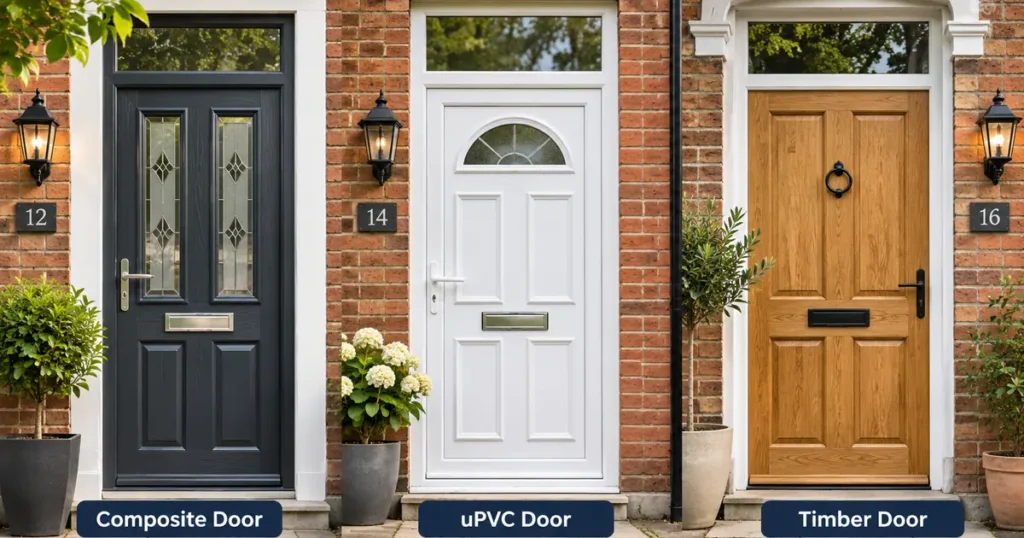
Do front doors and patio doors need a FENSA certificate? The Planning Portal singles out external doors that are at least half glazed, and says those need approval unless a registered installer does the work. A solid front door with a small glass panel is a grey area: the energy rules still apply, but the notification route can differ. Ask your installer or your council which one covers your door. We would rather you ask than assume, because the answer decides what paperwork you should end up with.
Roof windows and rooflights
Roof windows and rooflights sit inside the same competent person scheme as ordinary windows, so a registered installer can certify them in the same way. They have their own heat-loss limit in the Approved Document, which is why a roof window specification is worth checking separately from the windows on the same quote.
What the scheme does not cover
FENSA’s scheme covers replacement external windows, doors, roof windows and rooflights on the original footprint of a house, as long as the use and size of the rooms do not change. New conservatories, porches and extensions sit outside it, and so do commercial buildings.
Does a conservatory need a FENSA certificate? A new conservatory is outside the scheme. Whether Building Regulations apply to a conservatory depends on how it is built and how it is separated from the house, so ask your Building Control team rather than relying on a general rule.
Building Regulations versus planning: these are two separate systems. Building Regulations ask whether the work is safe and efficient. Planning asks whether the result is acceptable for the street. Our guide to the planning side covers appearance, Article 4 streets and conservation areas, so this guide stays on the build.
What is a FENSA certificate, and what does it prove?
FENSA stands for the Fenestration Self-Assessment Scheme. It was authorised in 2002 as the first competent person scheme for windows and doors in England and Wales. FENSA assesses its approved installers and issues a certificate to the homeowner confirming compliance. FENSA also says every approved installer must provide warranty insurance, which covers your installation if the company stops trading within the life of the warranty.
FENSA, Certass and other competent person schemes: how they compare
GOV.UK lists several schemes that can certify replacement windows, doors, roof windows and rooflights, including ASSURE, Blue Flame, BM TRADA, BSI, Certass, Certsure, FENSA, NAPIT and STROMA. Each runs its own registration and checks, so do not assume every scheme covers every kind of job. Ask your installer which scheme it belongs to, and ask for the scheme and registration number in writing. People say “FENSA certificate” for all of them, but the certificate you receive may carry another scheme’s name.
Is FENSA the same as Building Regulations approval? No. The Building Regulations are the legal standard. FENSA is one of the routes that lets an installer prove you met that standard without a separate council inspection. An installer outside a scheme leaves you with the other route, which is Building Control.
What your certificate shows, and what it does not
The certificate is evidence that the installation was notified through the relevant competent person scheme and certified as complying with the applicable Building Regulations requirements. It does not tell you the windows are well made, and it is not a guarantee. FENSA says guarantees come from the installer, not from FENSA, so read yours separately.
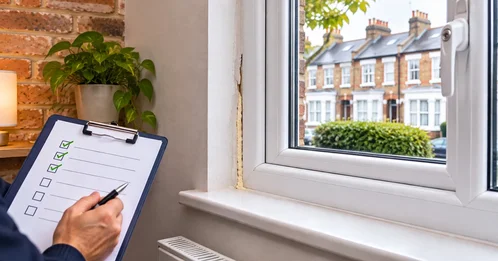
Does a FENSA certificate mean my windows were fitted well? Not on its own. It is compliance evidence, not a workmanship check. Look over the finished job yourself, and use our snagging guide to check the details before you sign off.
Is FENSA a legal requirement?
No. The legal requirement is to comply with the Building Regulations. FENSA is one recognised way to show that compliance, and an installer can use another approved competent person scheme instead. Where no scheme applies, you use the local authority’s Building Control route.
How does the certificate process work, step by step?
- The job is finished. Your registered installer records the work through its competent person scheme.
- Compliance is notified. The scheme handles the required notification to the local authority.
- You receive the certificate. GOV.UK says to contact the scheme operator if you have heard nothing within 30 days of completion.
- You keep the paperwork. File the certificate with your property documents so you can produce it if you sell.
Who tells the council the work is done? The scheme does, when a registered installer carries out the job. If your installer is not registered with a suitable scheme, or you do the work yourself, you arrange approval through Building Control instead.
Local procedures and charges differ. Islington, for example, publishes specific guidance for work notified through competent person schemes, so check your own borough’s current requirements. If the certificate never arrives, our no FENSA certificate guide covers what to do next.
What must new windows and doors achieve?
Energy performance is where building regulations for replacement windows become technical. Approved Document L, the part of the regulations on saving fuel and power, sets the limit for a replacement window in an existing home at a U-value of 1.4 W/m²K or lower, or a Window Energy Rating of Band B. A U-value measures how quickly heat escapes through the glass and frame, so a lower number is better. A replacement must also be no worse than the element it replaces.
What U-value do replacement windows need? 1.4 W/m²K or lower, or Window Energy Rating Band B, under the current Approved Document for existing homes in England. A 2026 edition of the document takes effect on 24 March 2027 for most building work, and transitional rules decide which edition covers a job that starts close to that date, so ask your installer which one applies to yours.
Older homes get some flexibility. Where a window cannot meet the limit without harming a building’s character, the document allows a centre-pane U-value of up to 1.2 W/m²K, or low-emissivity secondary glazing over the single glazing, and it expects the council to take the conservation officer’s advice. Our conservation areas guide covers the planning side for North London boroughs.
Which other rules can touch a window swap?
The Approved Documents cover more than heat loss. Depending on the room and the position of the window, your installer may also need to think about:
Your installer should tell you which of these apply to your windows before they order them.
What should you ask before you sign?
FENSA’s own advice is to check that an installer is approved, using the FENSA website, and to ask for the certificate promise in writing. Add these:
Ask us, and anyone else you collect a quote from, to explain in writing how the certificate will be provided. Our guide to choosing an installer lists more questions worth asking.
Rules clear? Now get your windows priced.
Send us your postcode and a few clear photos of the windows. We arrange a free survey and a written, no-obligation quote.
- Free survey
- Written quote
- No obligation