Snagging After Window Fitting: What to Check and Do
Windows not fitted properly can mean anything from an unfinished detail around the frame to a window that sticks, leaks or will not lock. This guide is for London homeowners who have spotted window snags or signs their new windows were fitted incorrectly. It shows you what to check, how to report problems and what to do if the installer will not come back.
What should you do if your new windows have not been fitted properly? Photograph and record each problem, then send the installer a written report and ask for a dated plan to put it right. Speak to the installer before you adjust or repair anything yourself, because DIY fixes can affect your guarantee.
Sort the snags first, then decide what happens next.
If it turns out your windows need replacing, we arrange a free home survey and a written, no-obligation quotation.
How a quote works
- 1Send photosA few clear photos and your postcode.
- 2Free surveyWe arrange a visit to measure up.
- 3Written quoteClear prices you can compare.
Free survey · Written quote · No obligation
Window snagging checklist: what to check once the fitters have finished
What is window snagging? Snagging means checking new work for small faults and unfinished details, and getting them put right.
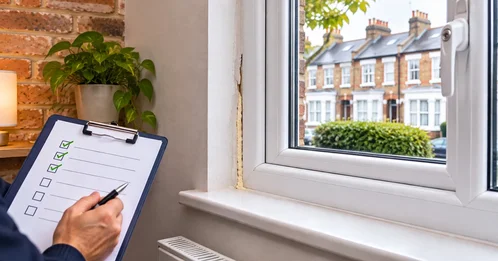
Once the fitters have left, check each new window while the work is still fresh. Look at the finish in daylight with your quotation and paperwork nearby, and check both sides where it is safe to do so. If you later notice water coming in after rain or a draught in windy weather, add that to your record too. What happens on fitting day explains the usual stages.
These are practical visual checks, not a technical inspection or a legal test, and designs differ. Do not put yourself at risk to inspect high windows; report what you can see safely.
| Check | What good looks like | What to record |
|---|---|---|
| Frame alignment | Frame appears consistently aligned within the opening | Tilt, uneven lines or bowing, and which window |
| Opening and closing | Sashes and casements move freely and shut fully | Which windows stick, catch or will not close |
| Handles and locks | Handles operate smoothly and the fitted locking mechanism engages correctly | Stiffness, noise or a lock that does not engage |
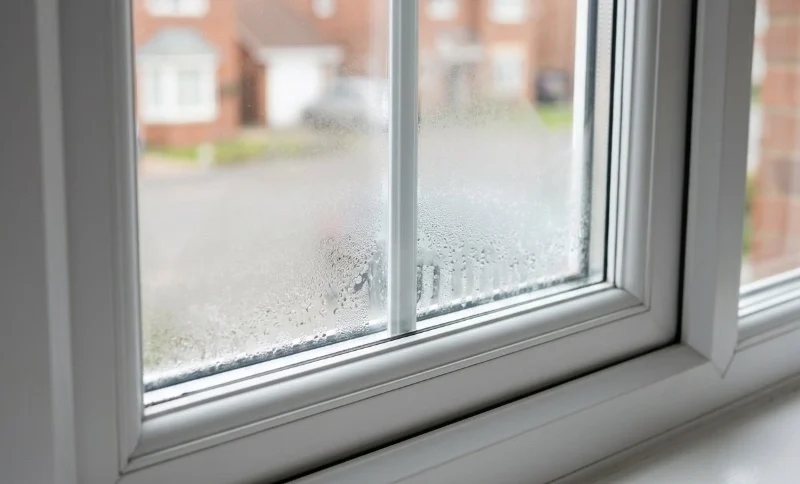
| Glass | No cracks, chips or moisture between the panes | Close-up photos taken before cleaning |
| Seals and gaskets | Seals look continuous and seated, with no twists | Gaps, twists or loose sections |
| Gaps round the frame | Consistent finish inside and out, with no unfilled gaps or mismatched strips | Where each gap is, with a photo |
| Draughts | No persistent draught round the closed window under normal conditions | Where air seems to enter, and in what weather |
| Water and drainage | No unexplained water ingress or fresh staining; visible drainage openings are unobstructed | Water marks, damp patches or visibly blocked drainage openings |
| Cills and trims | Cills and trims look secure, complete and neatly finished | Loose, damaged or missing pieces |
| Specification and paperwork | Handles, keys, vents and restrictors match your quote; guarantee and certificate are provided | Anything missing or different from the quote |
| Clean-up and make-good | Glass and frames are clean; plaster, brickwork and foam are tidy | Residue, marks or unfinished items |
Are scratches, foam and silicone marks always signs of poor installation? Not always. Some marks are cosmetic and can be cleaned off, but damage to the frame or glass, or badly finished joints, needs attention. Photograph them before you clean or alter anything.
Windows not fitted properly: is it a minor snag, a defect or a Building Regulations problem?
Knowing whether you are dealing with a finishing snag, a fault or a compliance issue helps you decide who to contact and what to ask for.
Not every defect is a Building Regulations breach, and a cosmetic snag does not automatically mean non-compliance.
Is it acceptable for fitters to cut a frame or add extra strips to make it fit? Cutting or added trim does not prove poor installation, because planned finishing pieces can be normal. Unexplained cutting, visible damage, poor finishing or uneven gaps deserve an answer. Ask the installer in writing what was done and why, and for a plan to correct it.
How to build your window snagging list and report it to the installer
Whether you have windows not fitted properly or a few snags, a written record is your strongest tool.
Build your window snagging list
Name each affected window by room, such as front bedroom or kitchen. Take one wide photo and one close-up of every problem, plus a short video if a window sticks, will not close or will not lock. Add the date and a one-line description. Use the checklist above as a starting point, or copy it into your own snagging checklist template, then add a separate entry for every affected window. This becomes your window snagging list and shows the installer exactly where each issue is. Save every email, message and agreed date.
Send it to the installer in writing
Put the list in one email, with numbered issues and photos attached. Ask the installer to inspect and correct each item, and to confirm the visit date and a target date for the corrective work in writing. If you speak by phone, confirm what was agreed by email afterwards.
Should you sign off the job or pay in full if some work is unfinished? Do not confirm the job as complete or satisfactory until the unfinished items are in your written snagging list, and ask the installer to confirm in writing how and when they will be put right. Payment is a separate question. Check your contract and payment terms, and do not assume you can withhold money, because that can start a dispute.
What if the window fitter has not completed your snagging list?
If the installer has not dealt with windows not fitted properly, or your snagging list is not completed, keep the correspondence and work through the following steps.
- Send a formal written complaint. Explain which windows are affected, describe what is wrong and state what you want the installer to do. Include your earlier snagging list and relevant photographs, and ask for a reply by a reasonable date. Send it to the company that sold you the job, which is responsible for its subcontractors.
- Give the installer a fair chance to respond and use the company’s complaints process, if it has one.
- Use your consumer rights. Under section 49 of the Consumer Rights Act 2015, installation work must be carried out with reasonable care and skill. If it does not meet that standard, section 55 may give you the right to require repeat performance, where putting the work right is possible. The installer must do this within a reasonable time, without significant inconvenience to you and at their own cost. If repeat performance is impossible, or is not provided within a reasonable time and without significant inconvenience, section 56 may give you the right to an appropriate price reduction.
- Get advice. Citizens Advice or Trading Standards can explain your position. The installer’s trade body may offer guidance if the company is a member, while an alternative dispute resolution scheme may be available if the installer participates in one.
- Consider a claim as a last resort, and take advice first.
Can you ask another company to fix the windows and recover the cost? Do not assume you can pass another firm’s bill to the original installer. Give the installer a reasonable chance to put the problem right first, keep your evidence and any written quotes, and take advice before you arrange costly remedial work.
When can FENSA help with a window installation complaint?
FENSA is not a general complaints service. It may take up a Building Regulations concern about domestic window or door replacement in England or Wales, if the installer is a FENSA Approved Installer that is still trading, the work is under six years old and you have already tried to resolve it with the installer. It does not cover domestic new builds, new-build extensions, commercial properties, conservatories, porches or work that required planning permission. FENSA also does not deal with customer care, product quality, compensation, refunds, contractual issues or guarantees. How FENSA self-certification works explains the certificate.
| Situation | Can FENSA help? | What to do instead |
|---|---|---|
| Building Regulations concern, FENSA Approved Installer still trading, work under six years old | It may take the complaint up | Write to the installer first, then use FENSA’s complaint form |
| Poor workmanship, cosmetic snags, sticking windows | Not its role | Complain to the installer in writing and follow the steps above |
| Refund, compensation, contract or guarantee dispute | No | Citizens Advice, the installer’s ADR scheme or Trading Standards |
| Installer not a FENSA Approved Installer, or work over six years old | No | Ask the relevant local authority Building Control team whether it can advise, or seek guidance from Citizens Advice |
If you cannot find your certificate, see tracking down a lost certificate.
Window snagging in London homes: what needs extra attention?
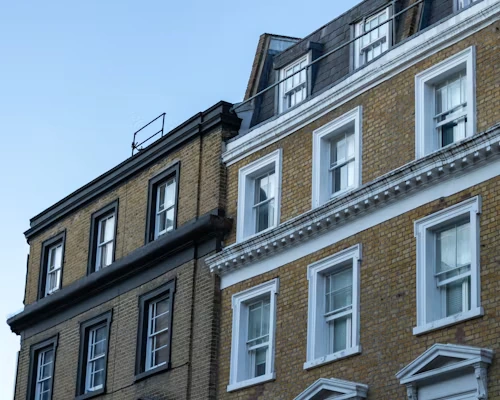
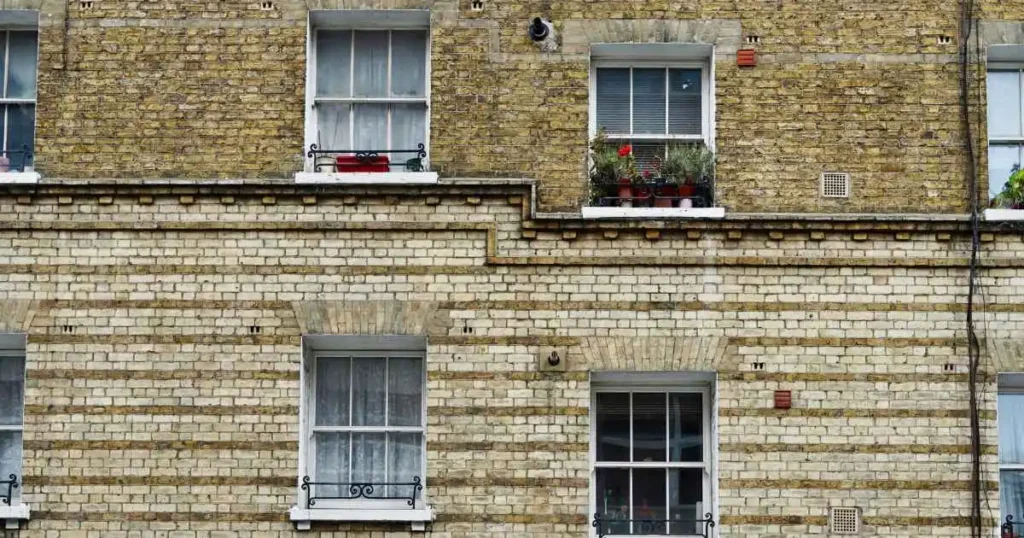
In many older London homes, including period terraces and converted properties, pay attention to the finish around the window, not only the frame and glass. Check the internal reveals, cills, plaster and external brickwork for unfinished making-good. If your home has a bay window, look at each section and the joints where the frames meet. In a leasehold flat, check your lease and any permissions before assuming who was responsible for arranging the replacement, and see approval for flat windows if you are unsure.
Questions people ask
Windows need replacing? Get your options priced.
Send us your postcode and a few clear photos of the windows. We arrange a free survey and a written, no-obligation quotation.
- Free survey
- Written quote
- No obligation
Sources checked (November 2026): Consumer Rights Act 2015, sections 49, 54, 55 and 56 (legislation.gov.uk); FENSA help pages on complaints and eligibility; Citizens Advice and Which? guidance on faulty services and complaints; homeowner forum threads (BuildHub, DIYnot, MyBuilder), used only to identify common questions. FENSA complaints page re-checked 14 November 2026.